
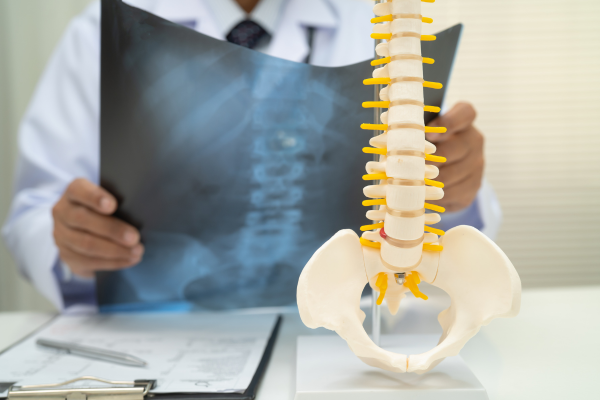
Advanced Spine Surgery for Lasting Pain Relief and Improved Mobility
About Spine Surgery
Modern spine surgery aims to:
- Relieve pressure on spinal nerves
- Stabilize the spine
- Correct spinal deformities
- Reduce pain
- Improve movement and function
Whenever appropriate, minimally invasive techniques are used to reduce tissue damage, postoperative pain, and recovery time.
Symptoms That May Require Spine Surgery
You may benefit from spine surgery if you experience:
- Persistent back pain
- Chronic neck pain
- Pain radiating to the arms or legs
- Numbness or tingling in the limbs
- Muscle weakness
- Difficulty walking
- Loss of balance
- Sciatica
- Herniated (slipped) disc
- Spinal deformity
- Difficulty performing daily activities
- Symptoms that do not improve with conservative treatment
Seek immediate medical attention if you experience sudden loss of bladder or bowel control, severe weakness in the legs, or rapidly worsening neurological symptoms.
Conditions Treated with Spine Surgery
- Herniated Disc – A damaged or slipped spinal disc that compresses nearby nerves, causing pain, numbness, or weakness.
- Spinal Stenosis – Narrowing of the spinal canal leading to nerve compression, back pain, and difficulty walking.
- Degenerative Disc Disease – Age-related wear and tear of spinal discs causing chronic neck or back pain.
- Spondylolisthesis – Forward slipping of one vertebra over another, resulting in pain and spinal instability.
- Spinal Fractures – Fractures caused by trauma, osteoporosis, or other conditions affecting spinal stability.
- Scoliosis – Abnormal sideways curvature of the spine requiring evaluation and, when indicated, surgical correction.
- Cervical Radiculopathy – Compression of nerves in the neck causing pain, numbness, tingling, or weakness in the shoulders and arms.
- Lumbar Radiculopathy (Sciatica) – Compression of nerves in the lower back causing pain, numbness, or weakness radiating into the legs.
- Spinal Tumors – Selected benign and malignant spinal tumors requiring surgical evaluation and management.
- Spinal Infections – Infections affecting the vertebrae, spinal discs, or surrounding tissues that may require surgical treatment.
- Chronic Neck Pain – Persistent neck pain caused by degenerative changes, disc disorders, or spinal instability.
Diagnosis & Evaluation
Before surgery, our spine specialists conduct a comprehensive assessment.
Medical Evaluation
- Detailed medical history
- Physical examination
- Neurological assessment
- Review of previous treatments
Spine Examination
- Range of motion assessment
- Muscle strength testing
- Reflex examination
- Sensory evaluation
- Walking and balance assessment
Diagnostic Investigations
- Digital X-rays
- MRI scan
- CT scan
- Bone density testing (when required)
- Blood investigations
- Pre-anesthetic evaluation
Spine Surgery Treatment Options
- Minimally Invasive Spine Surgery (MISS) – Performed through small incisions to reduce tissue damage, blood loss, postoperative pain, and recovery time.
- Microdiscectomy – Removal of the portion of a herniated disc compressing a spinal nerve to relieve pain, numbness, and weakness.
- Laminectomy (Spinal Decompression) – Removal of part of the vertebral bone to relieve pressure on the spinal cord or nerve roots.
- Spinal Fusion Surgery – Stabilizes the spine by permanently joining two or more vertebrae to treat instability, deformity, or severe degeneration.
- Cervical Spine Surgery – Surgical treatment for neck conditions including cervical disc herniation, spinal stenosis, and nerve compression.
- Lumbar Spine Surgery – Management of lower back conditions such as lumbar disc prolapse, spinal stenosis, spondylolisthesis, and spinal instability.
- Endoscopic Spine Surgery – Ultra-minimally invasive spine surgery using an endoscope for selected spinal conditions with faster recovery.
- Artificial Disc Replacement – Replacement of a damaged spinal disc with an artificial implant to preserve motion in selected patients.
- Foraminotomy – Enlargement of the nerve passageway (foramen) to relieve pressure on compressed spinal nerves.
- Discectomy – Removal of a damaged or herniated spinal disc causing nerve compression and radiating pain.
Benefits of Spine Surgery
- Significant pain relief
- Reduced nerve compression
- Improved mobility
- Better spinal stability
- Relief from numbness and tingling
- Improved muscle strength
- Enhanced quality of life
- Faster recovery with minimally invasive techniques (when appropriate)
- Improved ability to perform daily activities
- Long-term functional improvement
Why Choose Nirvi 2 Surgical and Maternity Hospital?
- Experienced Spine Surgeons – Highly skilled orthopedic and spine specialists experienced in treating simple, complex, and revision spinal disorders.
- Personalized Treatment Plans – Customized surgical solutions based on your diagnosis, lifestyle, activity level, and long-term functional goals.
- Advanced Spine Surgery Techniques – Modern minimally invasive and conventional spine procedures performed with precision, safety, and evidence-based practices.
- Minimally Invasive Spine Surgery Expertise – Advanced techniques using smaller incisions to reduce tissue damage, blood loss, postoperative pain, and recovery time.
- Accurate Diagnosis & Preoperative Planning – Comprehensive clinical evaluation and advanced imaging for precise diagnosis and individualized surgical planning.
- State-of-the-Art Operation Theaters – Advanced surgical facilities equipped with modern imaging technology, navigation systems, and patient monitoring equipment.
- Advanced Intraoperative Technology – Utilization of surgical microscopes, fluoroscopy, and spinal navigation systems to enhance surgical precision.
- Comprehensive Rehabilitation – Dedicated physiotherapy and rehabilitation programs designed to restore strength, mobility, and spinal function.
- Multidisciplinary Care – Collaboration with pain specialists, physiotherapists, anesthesiologists, neurologists, and rehabilitation experts for comprehensive patient care.
- Comprehensive Pain Management – Evidence-based pain control strategies to improve comfort before, during, and after surgery.
Our Spine Surgery Process
Step 1: Spine Consultation
Discussion of symptoms, medical history, and previous treatments.
Step 2: Comprehensive Evaluation
Physical examination, neurological assessment, and imaging studies.
Step 3: Personalized Treatment Planning
Development of an individualized surgical plan based on your spinal condition.
Step 4: Spine Surgery
The appropriate spine procedure is performed under anesthesia using advanced surgical techniques.
Step 5: Postoperative Care
Pain management, early mobilization, and close monitoring during hospital recovery.
Step 6: Physiotherapy & Rehabilitation
A structured rehabilitation program to improve strength, flexibility, posture, and mobility.
Step 7: Follow-Up Care
Regular follow-up visits to monitor healing, spinal stability, and long-term recovery.