
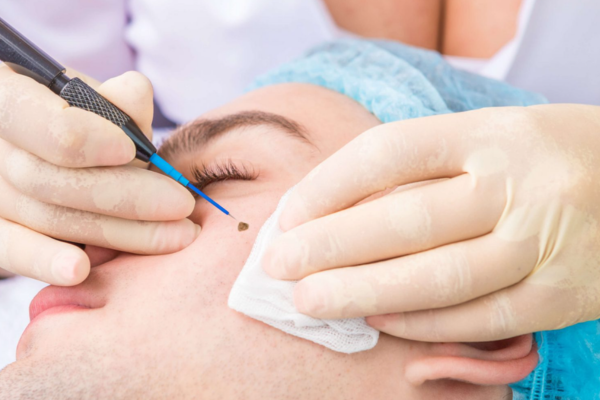
Safe and Effective Mole Removal for Healthier, Clearer Skin
About Mole Removal
Symptoms & Signs That Require Mole Evaluation
You should consult a specialist if you notice:
- A mole increasing in size
- Changes in the shape of a mole
- Irregular or uneven borders
- Multiple colors within a mole
- Bleeding or crusting
- Itching or pain
- Raised or thickened mole
- Cosmetic concerns about facial or body moles
- A new mole appearing in adulthood
Any sudden or unusual change in a mole should be evaluated promptly.
Causes of Moles
Moles form when pigment-producing skin cells (melanocytes) grow in clusters. Common contributing factors include:
- Genetics: A family history of moles can increase the likelihood of developing more moles.
- Sun Exposure: Ultraviolet (UV) rays can contribute to the formation of new moles and changes in existing ones.
- Hormonal Changes: Puberty, pregnancy, and other hormonal fluctuations may affect the appearance and size of moles.
- Aging: Moles may develop, change in appearance, or gradually fade as part of the natural aging process.
- Congenital Moles: Some moles are present at birth and may grow proportionately as the body develops.
Diagnosis & Evaluation
Before treatment, our specialists perform a thorough skin assessment.
Medical Evaluation
- Medical history review
- Assessment of personal and family history of skin conditions
- Evaluation of symptoms
Skin Examination
- Size and shape assessment
- Color evaluation
- Border examination
- Location analysis
Diagnostic Testing
- Dermoscopic examination (when required)
- Skin biopsy for suspicious lesions
- Histopathological analysis after removal if indicated
Mole Removal Treatment Options
Surgical Excision
The mole and a small margin of surrounding tissue are removed using precise surgical techniques for complete excision.
Ideal For:
- Larger moles
- Deep moles
- Suspicious skin lesions
- Congenital moles
Shave Excision
Raised moles are carefully shaved at the skin surface without deep stitches in selected cases, offering minimal downtime.
Ideal For:
- Small raised moles
- Cosmetic mole removal
- Benign skin lesions
- Non-cancerous skin growths
Cosmetic Mole Removal
Personalized mole removal treatments designed to improve the appearance of visible facial and body moles while achieving the best possible cosmetic results.
Ideal For:
- Facial moles
- Neck and body moles
- Cosmetic skin enhancement
- Visible benign moles
Benefits of Mole Removal
- Safe removal of unwanted moles
- Improved skin appearance
- Relief from irritation caused by clothing or shaving
- Early diagnosis of suspicious skin lesions
- Minimal scarring with advanced techniques
- Quick outpatient procedure
- Improved confidence
- Personalized treatment plans
- Fast recovery
- Long-lasting results
Why Choose Nirvi 2 Surgical and Maternity Hospital?
- Experienced Plastic & Cosmetic Surgeons – Skilled specialists with expertise in cosmetic mole removal and minor skin surgical procedures.
- Comprehensive Skin Evaluation – Thorough assessment of each mole to determine the safest and most appropriate treatment approach.
- Advanced Removal Techniques – Modern surgical methods focused on precision, safety, minimal scarring, and optimal cosmetic outcomes.
- State-of-the-Art Surgical Facilities – Fully equipped procedure rooms and operation theaters with advanced patient safety standards.
- Personalized Treatment Plans – Customized treatment based on the mole’s size, location, type, and individual cosmetic concerns.
- Cosmetic-Focused Care – Special emphasis on preserving natural skin appearance, especially for moles on the face and other visible areas.
- Comprehensive Patient Care – End-to-end support from consultation and mole removal to wound care, recovery, and follow-up.
Our Mole Removal Process
Step 1: Consultation & Skin Assessment
Discussion of your concerns, medical history, and examination of the mole.
Step 2: Diagnosis & Treatment Planning
Evaluation of the mole and selection of the most appropriate removal technique.
Step 3: Procedure Preparation
The treatment area is cleaned, and local anesthesia is administered for comfort.
Step 4: Mole Removal Procedure
The mole is removed using surgical excision or shave removal, depending on the clinical assessment.
Step 5: Wound Care & Recovery
The area is dressed, and detailed aftercare instructions are provided.
Step 6: Follow-Up Visit
Assessment of healing and review of biopsy results if tissue analysis was performed.
Step 7: Long-Term Skin Care
Guidance on scar care, sun protection, and regular skin examinations.