
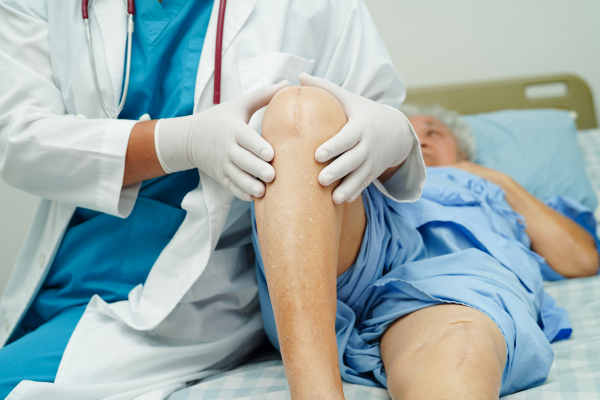
Regain Pain-Free Movement with Advanced Joint Replacement Surgery
About Joint Replacement Surgery
The most commonly replaced joints include:
- Knee Joint
- Hip Joint
- Shoulder Joint
- Elbow Joint (selected cases)
Modern joint replacement surgery aims to relieve pain, restore movement, and improve overall quality of life.
Symptoms That May Require Joint Replacement
You may be a candidate for joint replacement surgery if you experience:
- Persistent joint pain
- Severe joint stiffness
- Difficulty walking or climbing stairs
- Limited range of motion
- Swollen or inflamed joints
- Joint deformity
- Pain during rest or sleep
- Difficulty performing daily activities
- Reduced mobility despite medications or physiotherapy
- Chronic joint pain affecting quality of life
Causes of Joint Damage
Joint replacement may be recommended due to:
- Osteoarthritis – Age-related wear and tear of joint cartilage.
- Rheumatoid Arthritis – An autoimmune condition causing chronic joint inflammation and damage.
- Post-Traumatic Arthritis – Joint damage following fractures or injuries.
- Avascular Necrosis – Loss of blood supply leading to bone damage.
- Sports Injuries – Severe ligament or cartilage injuries affecting joint function.
- Congenital Joint Disorders – Structural abnormalities affecting joint development.
- Severe Joint Pain – Persistent pain that limits daily activities despite conservative treatment.
- Joint Stiffness – Reduced range of motion affecting mobility and quality of life.
- Cartilage Damage – Advanced cartilage loss causing bone-on-bone joint contact.
- Joint Deformity – Changes in joint alignment that impair function and movement.
- Failed Previous Joint Surgery – When earlier procedures do not provide lasting relief or function.
- Inflammatory Joint Diseases – Chronic conditions causing progressive joint damage beyond rheumatoid arthritis.
- Hip or Knee Fractures – Complex fractures that cannot be effectively repaired with other surgical methods.
- Reduced Quality of Life – Difficulty walking, climbing stairs, or performing routine daily activities due to severe joint disease.
Diagnosis & Evaluation
Before surgery, our orthopedic specialists perform a comprehensive assessment.
Medical Evaluation
- Detailed medical history
- Physical examination
- Assessment of overall health
- Review of previous treatments
Joint Examination
- Range of motion assessment
- Joint stability evaluation
- Pain assessment
- Walking and gait analysis
Diagnostic Investigations
- Digital X-rays
- MRI scan (if required)
- CT scan in selected cases
- Blood investigations
- Pre-anesthetic evaluation
Joint Replacement Treatment Options
- Total Knee Replacement (TKR) – Replacement of the damaged knee joint with an artificial implant to relieve pain, improve stability, and restore movement.
- Total Hip Replacement (THR) – Replacement of the damaged hip joint to reduce chronic pain, improve mobility, and enhance quality of life.
- Shoulder Replacement Surgery – Replacement of damaged shoulder joint surfaces to relieve pain and improve strength, stability, and range of motion.
- Partial Knee Replacement (Unicompartmental Knee Replacement) – Replacement of only the damaged portion of the knee joint in carefully selected patients, preserving healthy bone and tissue.
- Revision Joint Replacement – Replacement or correction of a worn-out, loosened, infected, or failed joint implant to restore function and relieve pain.
- Bilateral Joint Replacement – Replacement of both knees or both hips, either during the same surgery or in staged procedures, depending on the patient’s condition.
- Minimally Invasive Joint Replacement – Advanced surgical techniques using smaller incisions to reduce tissue damage, postoperative pain, and recovery time.
- Robotic-Assisted Joint Replacement – Computer-assisted technology that enhances surgical precision, implant positioning, and joint alignment for improved outcomes.
- Complex Joint Reconstruction – Specialized procedures for severe arthritis, deformities, bone loss, or complex revision cases requiring advanced reconstruction techniques.
Benefits of Joint Replacement Surgery
- Significant pain relief
- Improved joint mobility
- Better walking ability
- Enhanced quality of life
- Increased independence
- Correction of joint deformity
- Improved joint stability
- Long-lasting implant performance
- Better participation in daily activities
- Faster return to an active lifestyle with rehabilitation
Why Choose Nirvi 2 Surgical and Maternity Hospital?
- Experienced Orthopedic Surgeons – Highly skilled orthopedic specialists with extensive expertise in primary, complex, and revision joint replacement procedures.
- Personalized Treatment Plans – Individualized treatment strategies tailored to your condition, age, lifestyle, activity level, and long-term mobility goals.
- Advanced Surgical Techniques – Modern joint replacement procedures using evidence-based techniques focused on precision, safety, and improved functional outcomes.
- High-Quality Joint Implants – Use of internationally recognized implants designed for durability, stability, and long-term performance.
- State-of-the-Art Operation Theaters – Advanced surgical facilities equipped with modern operation theaters, sterile environments, and comprehensive patient monitoring systems.
- Computer-Assisted Surgical Planning – Advanced preoperative planning techniques to improve implant alignment, accuracy, and surgical outcomes.
- Minimally Invasive Techniques – Smaller incisions and muscle-sparing approaches, where appropriate, to reduce pain, blood loss, and recovery time.
- Comprehensive Rehabilitation Program – Structured physiotherapy and rehabilitation plans designed to promote faster recovery, improve strength, and restore joint function.
- Accurate Diagnosis & Preoperative Planning – Comprehensive clinical evaluation and advanced imaging to ensure precise diagnosis and individualized surgical planning.
- Comprehensive Pain Management – Multimodal pain management strategies to enhance comfort during and after surgery.
Our Joint Replacement Surgery Process
Step 1: Orthopedic Consultation
Discussion of symptoms, medical history, and previous treatments.
Step 2: Comprehensive Evaluation
Physical examination, imaging studies, and assessment of joint damage.
Step 3: Personalized Surgical Planning
Selection of the most appropriate joint replacement procedure and implant.
Step 4: Joint Replacement Surgery
Replacement of the damaged joint using advanced surgical techniques under appropriate anesthesia.
Step 5: Postoperative Care
Pain management, early mobilization, and monitoring during hospital recovery.
Step 6: Physiotherapy & Rehabilitation
Structured rehabilitation program to restore strength, flexibility, and mobility.
Step 7: Follow-Up Care
Regular follow-up visits to monitor healing, implant function, and long-term recovery.