
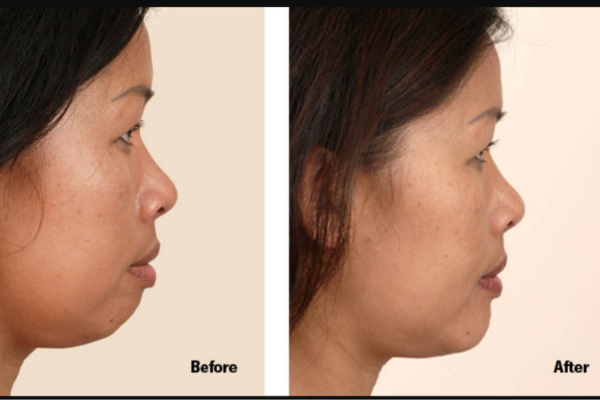
Enhance Facial Balance and Achieve a Well-Defined Jawline
About Chin Augmentation
Chin augmentation can be performed using:
- Chin implants
- Sliding genioplasty (chin bone reshaping)
- Fat grafting in selected cases
The choice of procedure depends on individual facial anatomy and aesthetic goals.
Symptoms & Cosmetic Concerns
You may consider chin augmentation if you have:
- Receding or weak chin
- Poor jawline definition
- Facial imbalance
- Lack of chin projection
- Double chin appearance due to a small chin
- Asymmetrical chin shape
- Dissatisfaction with side facial profile
- Desire for a stronger facial contour
Causes of a Weak or Recessed Chin
• Genetics – Inherited facial structure and jaw shape are the most common causes of an underdeveloped or recessed chin.
• Developmental Factors – Natural variations in chin bone growth and jaw development can influence chin projection and facial balance.
• Aging – Loss of skin elasticity, soft tissue volume, and structural support over time can affect facial contours and chin definition.
• Facial Proportion Imbalance – A smaller chin may make other facial features, particularly the nose, appear more prominent and can reduce overall facial harmony.
• Congenital Conditions – Certain congenital or structural conditions may impact normal chin and jaw development, contributing to a recessed chin appearance.
Diagnosis & Evaluation
Before treatment, our specialists perform a comprehensive facial assessment.
Medical Evaluation
- Detailed medical history
- Review of previous surgeries
- General health assessment
Facial Analysis
- Chin projection assessment
- Jawline evaluation
- Facial symmetry analysis
- Profile examination
Treatment Planning
- Discussion of aesthetic goals
- Selection of appropriate augmentation technique
- Digital planning when required
This personalized approach ensures balanced and natural-looking outcomes.
Chin Augmentation Treatment Options
Benefits:
- Immediate improvement in chin definition
- Long-lasting results
- Natural facial enhancement
• Sliding Genioplasty – A surgical procedure that reshapes and repositions the chin bone to improve projection, symmetry, and contour.
Benefits:
- Uses your natural bone structure
- Customized correction
- Permanent results
• Chin Fat Grafting – Selected patients may benefit from fat transfer procedures to improve chin shape, contour, and facial harmony.
Benefits:
- Natural tissue enhancement
- Improved facial balance
- Minimally invasive approach
• Combination Facial Contouring – Chin augmentation may be combined with other facial procedures for comprehensive facial enhancement, including:
- Rhinoplasty (Nose Reshaping)
- Double Chin Treatment
- Jawline Contouring
- Facial Rejuvenation Procedures
Benefits of Chin Augmentation
- Improved facial harmony
- Enhanced jawline definition
- Stronger chin profile
- Better facial proportions
- Increased confidence and self-esteem
- More balanced side profile
- Natural-looking results
- Long-lasting improvement
- Improved neck and chin contour
- Enhanced overall facial aesthetics
Why Choose Nirvi 2 Surgical and Maternity Hospital?
• Experienced Cosmetic Surgeons – Specialists skilled in facial contouring, chin augmentation, and aesthetic enhancement procedures.
• Personalized Treatment Plans – Customized solutions designed according to individual facial anatomy, proportions, and aesthetic goals.
• Advanced Surgical Techniques – Modern methods focused on safety, precision, and achieving natural-looking results.
• State-of-the-Art Surgical Facilities – Advanced operation theaters equipped with modern technology and comprehensive patient monitoring systems.
• Comprehensive Facial Analysis – Detailed evaluation and planning to achieve balanced facial proportions and improved profile harmony.
• Natural-Looking Outcomes – Enhancements designed to improve facial definition while preserving natural appearance and symmetry.
• Dedicated Postoperative Care – Complete support and follow-up care throughout recovery to ensure optimal healing and patient satisfaction.
Our Chin Augmentation Process
Step 1: Consultation & Facial Assessment
Discussion of concerns, expectations, and desired facial profile improvements.
Step 2: Comprehensive Evaluation
Detailed examination of chin structure, jawline, and facial proportions.
Step 3: Personalized Treatment Planning
Selection of the most appropriate chin augmentation technique.
Step 4: Chin Augmentation Procedure
Implant placement or bone reshaping performed under anesthesia.
Step 5: Recovery & Monitoring
Postoperative care and observation to ensure smooth healing.
Step 6: Follow-Up Visits
Regular appointments to monitor recovery and aesthetic outcomes.
Step 7: Long-Term Results
Guidance on maintaining facial aesthetics and overall health.