
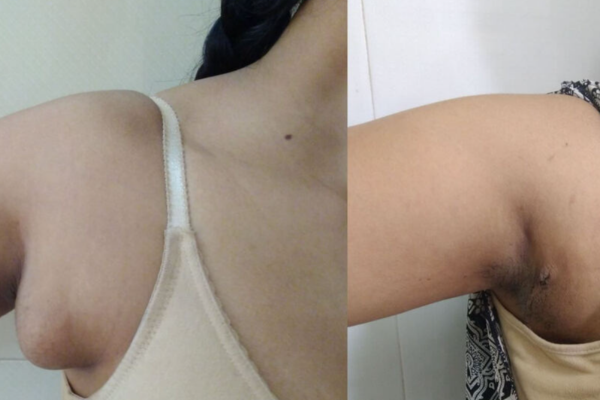
Expert Treatment for Axillary (Underarm) Breast Tissue with Advanced Surgical Care
About Axillary Breast Surgery
While usually benign, excess axillary breast tissue can cause:
- Cosmetic concerns
- Pain and tenderness
- Swelling during hormonal changes
- Restricted arm movement
- Difficulty wearing fitted clothing
Axillary breast surgery removes the excess tissue and restores a smoother underarm contour.
Symptoms of Axillary Breast Tissue
You may benefit from evaluation if you experience:
- Lump or fullness in the underarm area
- Swelling in one or both armpits
- Pain or tenderness under the arm
- Enlargement during menstrual cycles
- Increased swelling during pregnancy or breastfeeding
- Difficulty wearing fitted clothes
- Cosmetic dissatisfaction
- Skin irritation due to excess tissue
Early assessment helps determine the most appropriate treatment option.
Causes of Axillary Breast Tissue
Common causes and contributing factors include:
Congenital Development
Accessory breast tissue develops during fetal growth and may remain unnoticed until later in life.
Hormonal Changes
- Puberty
- Pregnancy
- Breastfeeding
- Menstrual cycles
- Menopause
Weight Gain
Increased fat accumulation can make underarm breast tissue more prominent.
Genetic Factors
A family history may increase the likelihood of developing accessory breast tissue.
Diagnosis of Axillary Breast Tissue
Our specialists perform a detailed evaluation, including:
Clinical Examination
- Assessment of underarm swelling
- Evaluation of breast and axillary tissue
- Review of symptoms and medical history
Imaging Studies
- Ultrasound examination
- Mammography when required
- Additional imaging if necessary
Differential Diagnosis
To rule out:
- Lipoma
- Enlarged lymph nodes
- Cysts
- Other underarm masses
Accurate diagnosis ensures safe and effective treatment planning.
Treatment Options
Conservative Management
For mild cases without symptoms, observation and regular monitoring may be recommended.
Lifestyle Measures
- Weight management
- Supportive clothing
- Monitoring for changes
Axillary Breast Surgery
Surgical removal is the most effective treatment for persistent or symptomatic accessory breast tissue.
Surgical Excision
Removal of excess glandular breast tissue through carefully planned incisions.
Liposuction-Assisted Removal
Suitable for patients with excess fatty tissue and minimal glandular tissue.
Combined Technique
A combination of surgical excision and liposuction may provide optimal contouring and cosmetic results.
Our surgeons select the most appropriate approach based on individual anatomy and treatment goals.
Benefits of Axillary Breast Surgery
- Removal of excess underarm breast tissue
- Improved arm and underarm contour
- Enhanced body confidence
- Reduced pain and discomfort
- Better clothing fit
- Elimination of swelling during hormonal changes
- Improved mobility and comfort
- Long-lasting results
- Minimal scarring with modern techniques
Why Choose Nirvi 2 Surgical and Maternity Hospital?
• Advanced Surgical Techniques – Modern procedures focused on precision, safety, and optimal aesthetic outcomes.
• Personalized Treatment Planning – Customized surgical approaches tailored to each patient’s unique needs and goals.
• Comprehensive Evaluation – Accurate diagnosis, detailed assessment, and complete treatment planning under one roof.
• Safe Surgical Environment – State-of-the-art operation theaters with advanced patient monitoring and safety protocols.
• Minimal Scarring Approach – Specialized techniques designed to minimize visible scarring and enhance cosmetic results.
• Faster Recovery – Modern surgical methods aimed at reducing downtime, discomfort, and promoting quicker healing.
Our Axillary Breast Surgery Process
Step 1: Consultation
Detailed discussion of symptoms, concerns, and cosmetic goals.
Step 2: Clinical Evaluation
Comprehensive examination and imaging studies.
Step 3: Treatment Planning
Selection of the most suitable surgical technique.
Step 4: Surgical Procedure
Removal of excess axillary breast tissue under anesthesia.
Step 5: Recovery and Observation
Postoperative monitoring and wound care guidance.
Step 6: Follow-Up Visits
Regular reviews to assess healing and treatment outcomes.
Step 7: Long-Term Results
Guidance for maintaining comfort and overall breast health